Field notes pocket journal
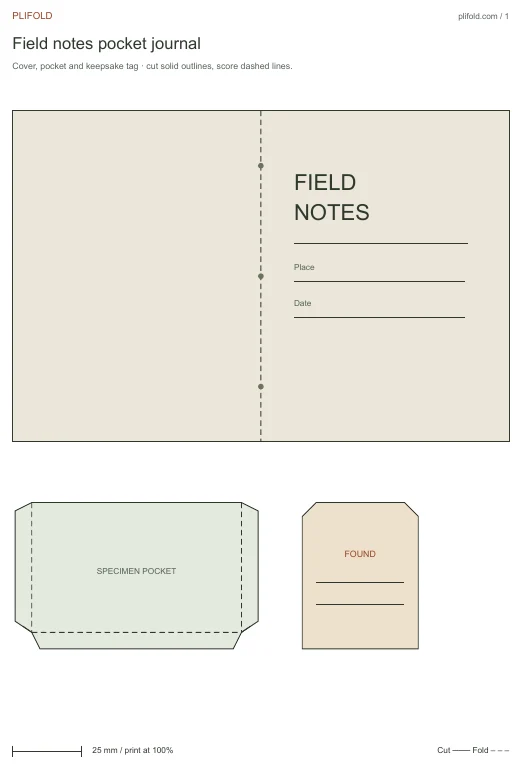
Make a 90 × 120 mm field notebook with a pocket for one ticket, pressed-paper scrap or handwritten tag.
Download free junk journal printables in A4 or US Letter. Make a botanical pocket with tickets and a borrowing card, then choose a journal or binding tutorial.
One sheet makes a pocket, a ruled borrowing card, two tickets, a spine label and a leafy backing panel. Print on 140–160 gsm paper. Cut the solid outlines, fold the three dashed tabs behind the pocket and glue the tabs to the backing. Leave the top edge open for the card.
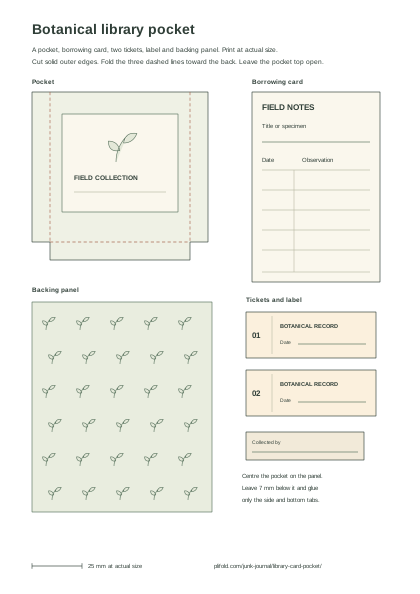
Try these two sketches on a 150 × 210 mm page. Cut out the botanical pocket kit first and lay the pieces down loose. Slide the borrowing card in and out before gluing anything.
Centre a 90 × 60 mm landscape photo 15 mm below the top edge. Place the 90 mm wide backing panel below it, leaving 10 mm of space. Attach the pocket to its panel using only the tabs. Slip one ticket inside and write the photo date on the other.
Place the pocket near the lower outside corner of the left page. Keep its mouth clear. On the facing page, line up the two tickets vertically with the photo edge and leave a pencil-width gap between them. Tape each ticket along one short end so you can lift it to read a note underneath. Close the spread before fixing loose ephemera to check the binding clearance.
For a notebook you can sew from loose folded sheets, use the three-hole pamphlet stitch guide.
Choose a letter folio for a flat keepsake, a seed ledger for small dated records, or a fall rubbing journal for a pair of drawings. To make a notebook that opens flat, follow the Coptic binding tutorial. If you have loose sheets, try four-hole stab binding.
Make a 90 × 120 mm field notebook with a pocket for one ticket, pressed-paper scrap or handwritten tag.
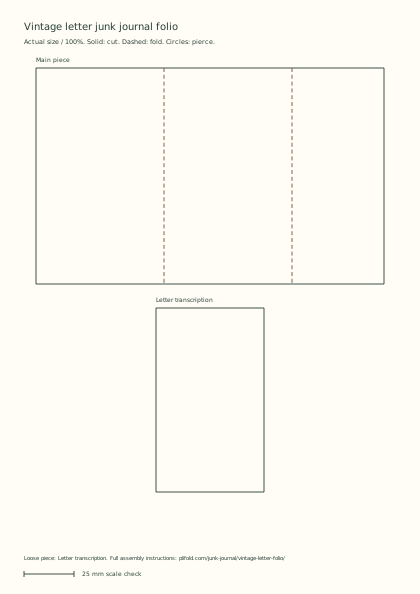
Keep a transcription beside its source in a three-panel letter folio. A short outer flap closes over the packet without touching the original.
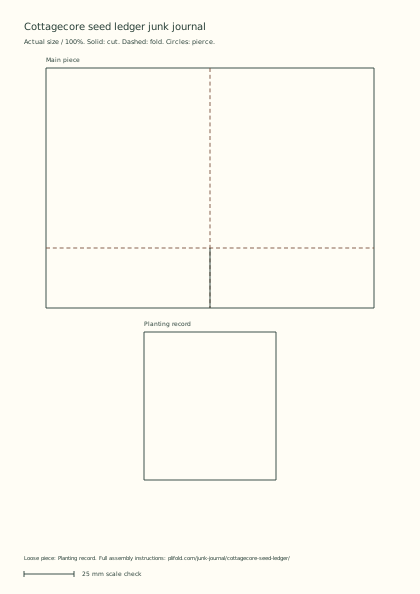
Give each planting a small removable record. A fold-up pocket on each of two facing pages holds a date card and a clipping from a seed packet.
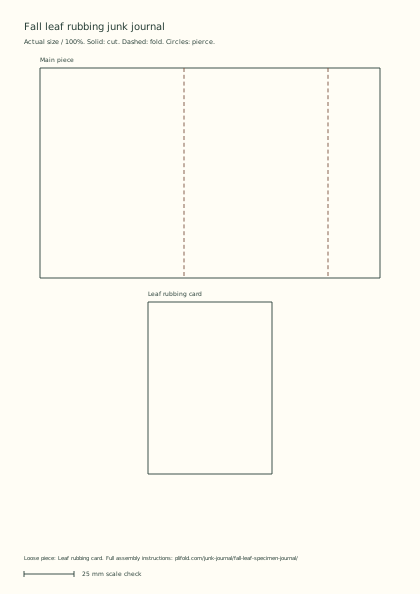
Compare two leaf rubbings without trapping a damp leaf in the book. A narrow fold-out panel keeps the tree name hidden until the reader opens it.
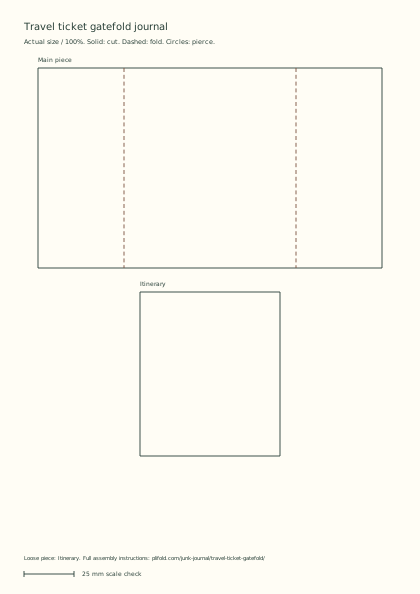
Open the two front gates to reveal a trip itinerary. Each gate carries one half of the outward and return journey.
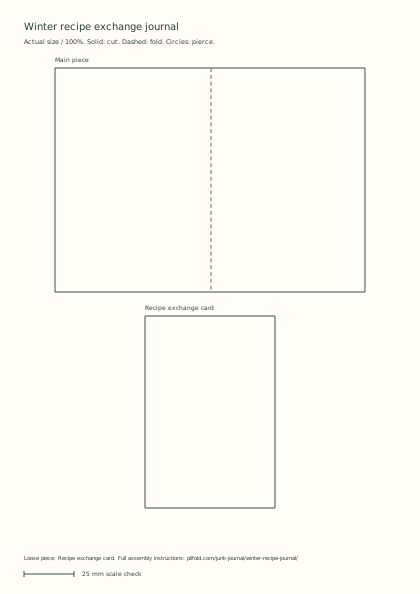
Keep ingredients upright while a second panel folds down for cooking notes. A replaceable recipe card can travel to the next cook.
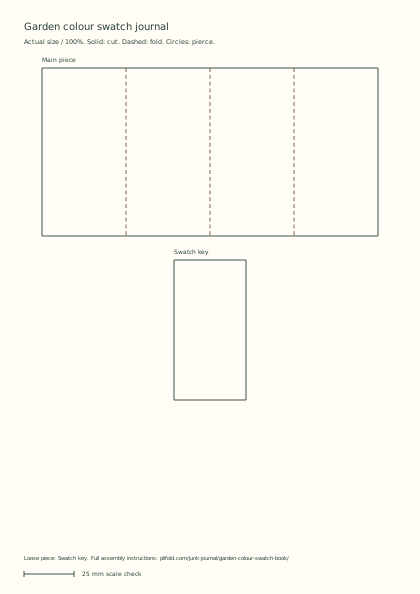
Archive four scraps of colour from one walk in a concertina that stands open. The loose key records where each colour came from.
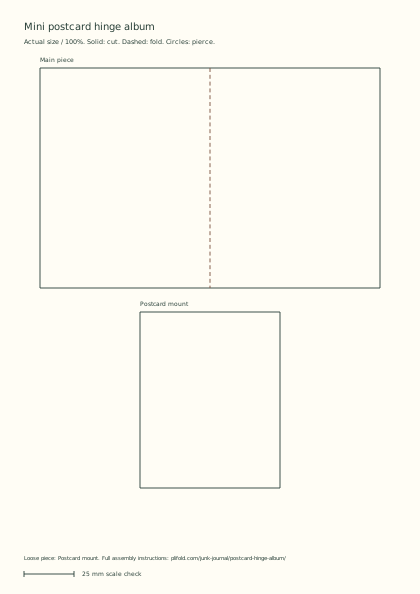
Mount small copies on individual paper hinges so their handwritten backs remain readable. The cover opens to a 170 mm spread.
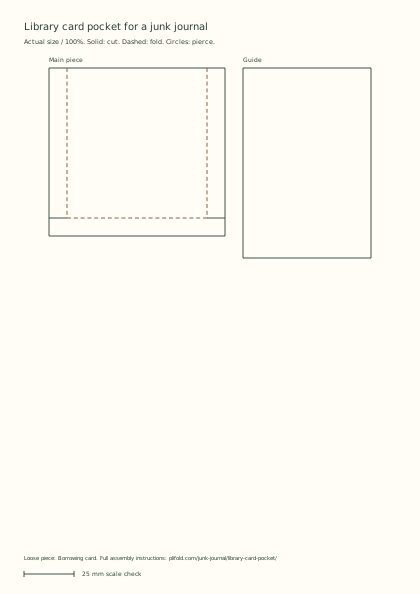
Build a freestanding pocket with three folded glue tabs. A matching borrowing card leaves room for a book title, a reader and the return date.
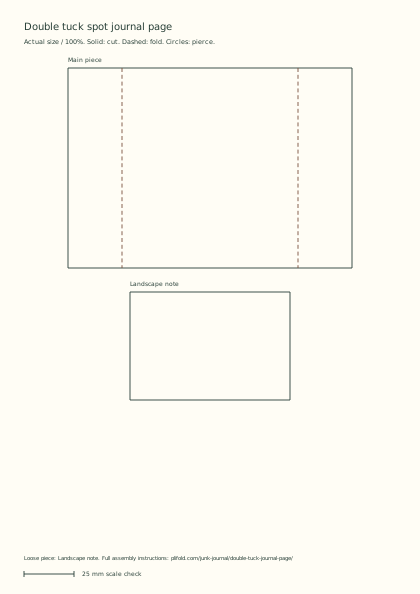
Two narrow edge pockets face inward on a flat backing. They hold opposite ends of a removable landscape note.
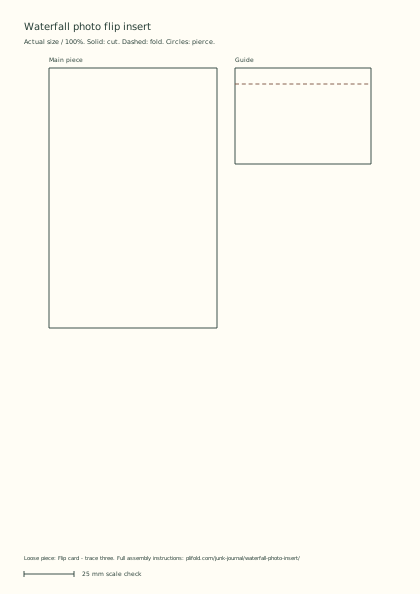
Three hinged photo cards overlap down a backing page. Lift them in sequence to read a short caption under each image.
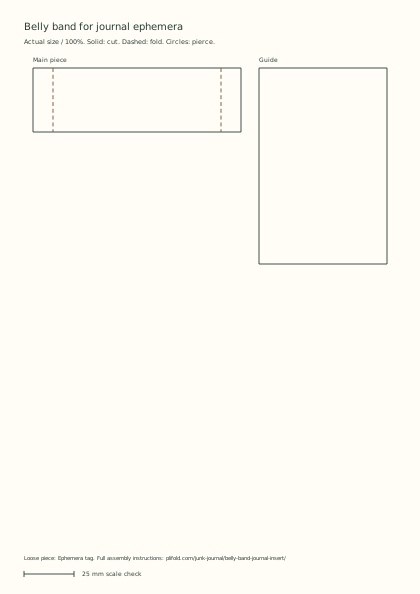
A wide strip crosses the page and holds a loose tag. Its two folded feet leave a little clearance for a postcard or folded note.
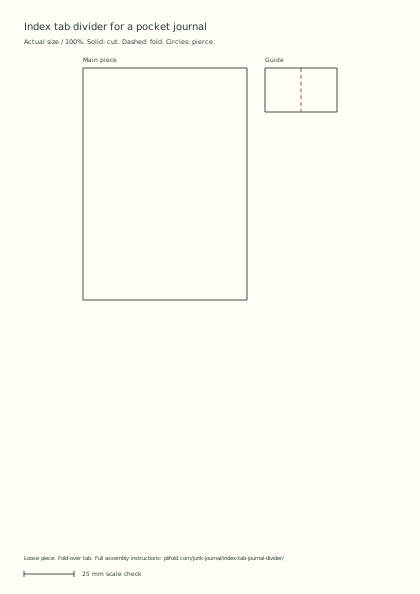
Give a small insert a projecting, doubled tab. Make several dividers from different paper scraps and stagger their tabs along the fore-edge.
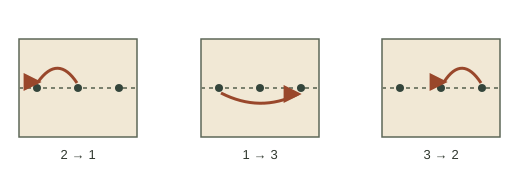
Bind one nested section of paper with a single thread. This stitch holds the field notes journal together and leaves both thread ends inside.
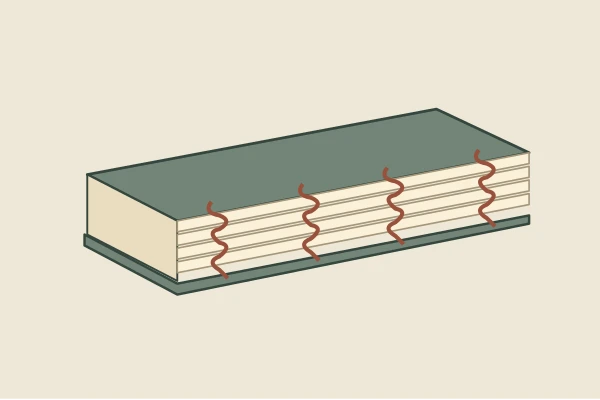
Four small gatherings of folded sheets make a 32-page journal. Each new gathering hooks into the thread below it, leaving the chains visible along the spine.
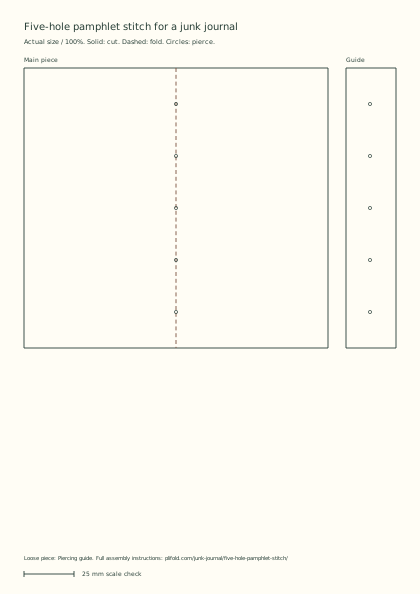
Bind a single folded section with five sewing stations. The printed guide spaces the stitches on a 140 mm spine.
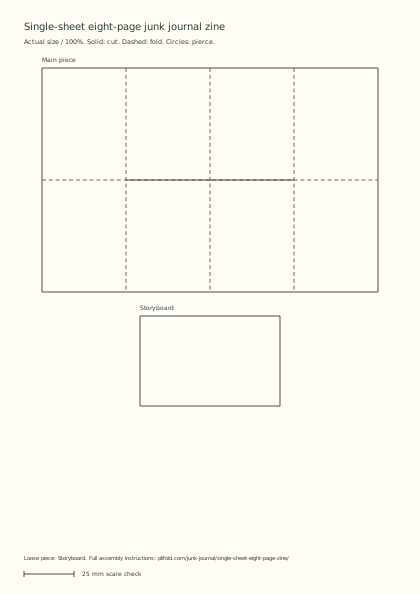
Turn one rectangle into an eight-page miniature with one central slit. The separate storyboard lets you plan the reading order after folding.
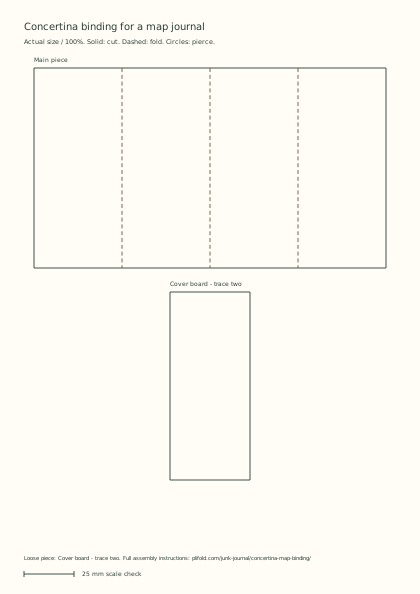
An unsewn accordion links four sections of a route. Open one panel as a page or spread the complete journey flat on the table.
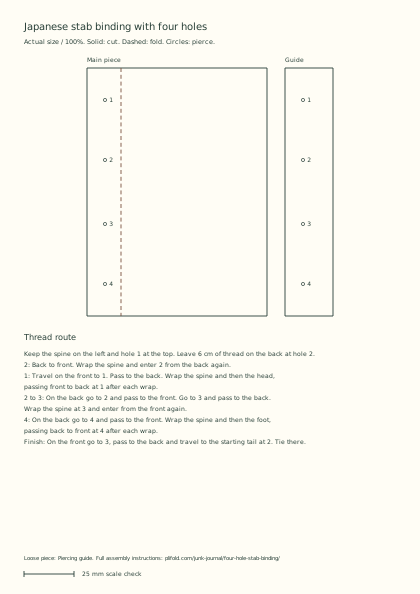
Make a pocket-size notebook from loose journal pages. Sew four wraps along the spine and one around each end, then open the cover along a scored hinge.
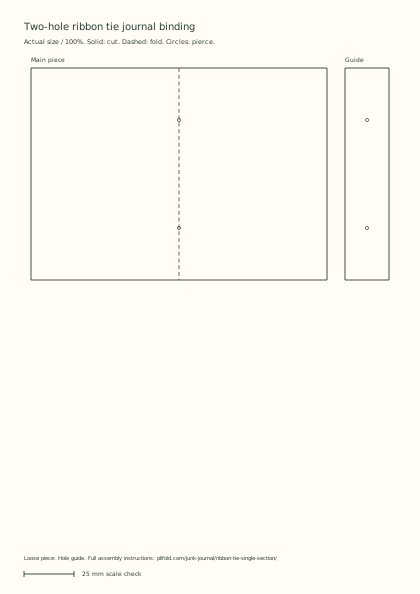
A removable ribbon holds nested pages together. Undo the bow to exchange a filled page for a blank one without cutting the binding.
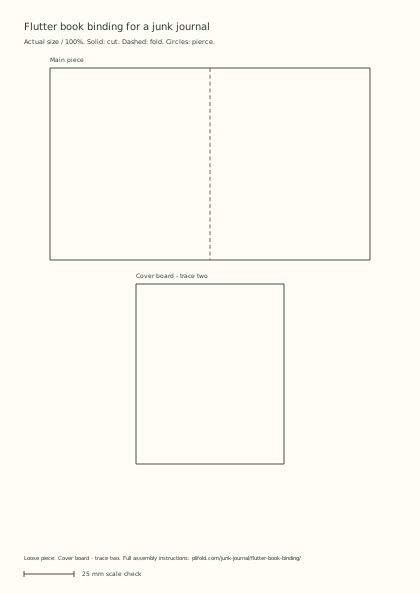
Join folded leaves at the fore-edge so a row of double pages opens in succession. The unglued spines remain flexible.